Data Modeling Made Simple with erwin Data Modeler

Jeff Harris and Steve Hoberman explain data modeling and how to get up and running with erwin DM. Step by step, business analysts, data professionals and project managers will learn how to build effective conceptual, logical and physical data models.

Complete the stages in identifying essential business requirements, designing the logical data model, transposing those logical modeling objects into physical tables and columns, and even generating the implementation database scripts.


About the Authors

Jeff Harris is principal data architect for a Fortune 200 company. He has more than30 years of IT experience, specializing in data modeling and data architecture for 20+ years. He has used erwin DM to work on global projects for large corporations in the banking, government, logistics, retail, freight and petroleum industries.

Steve Hoberman has trained more than 10,000 people in data modeling since 1992. Steve is known for his ability to translate business requirements into technical specifications. He is the author of nine books on data modeling, including the bestsellers Data Modeling Made Simple and The Rosedata Stone. One of Steve’s frequent data modeling consulting assignments is to review data models using his Data Model Scorecard® technique.


Master erwin DM to deliver robust and precise designs for both operational and analytical projects.

Save 20% on the print, PDF or print/PDF bundle with coupon code erwinDM.
Data Modeling: Drive Business Value and Underpin Governance with an Enterprise Data Model

Designing and deploying new relational databases, application development, data integration, master data management, business intelligence/analytics and Big Data adoption, data governance and more. Data modeling is still hip, maybe more than ever as you’ll learn in this new white paper.

Solving the Enterprise Data Dilemma

Harmonizing Data Management and Data Governance to Accelerate Actionable Insights

Is your organization using its data to reach deeper conclusions about how to:

  • Achieve regulatory compliance?
  • Drive revenue?
  • Make other strategic decisions?

Probably not, but you’re not alone.

The truth is that most enterprises don’t know exactly what data they have or even where some of it is. They also struggle to integrate known data in its various formats and from numerous systems—especially if they don’t have a way to automate those processes.

Does your business have a plan for solving this data dilemma?

It starts by harmonizing IT-oriented data management with business-led data governance to fuel an automated, high-quality data pipeline. That’s faster time to data preparation, data visibility and data-driven insights to realize results, including compliance, innovation and growth.

Download the e-book.

Application Development Is New Again

Realizing value from app development in the age of digital transformation requires strong commitment to data modeling and governance

It’s an exciting time for application development as enterprises turn toward digital transformation.

In this new world of app development, the business calls on application developers to play an increasingly important role in achieving business goals. Chances are, they’re being asked to create solutions that are real-time and mobile and likely draw upon analysis of large volumes of integrated data of diverse types (unstructured, semi-structured and structured) to support end users – whether providing them with personalized on-the-spot product recommendations, up-to-the-minute stock market portfolio values, or individual patient insights across the healthcare continuum.

Be positioned to deliver unique, real-time and responsive apps that will enhance your reputation among users and support a wealth of new business opportunities related to digital transformation. At the same time, preserve and extend the hard work you’ve already done toward maintaining well-governed data assets.

Find out how to get a head start on competitors in a world where application development is indeed new again, with our e-book that speaks to data modeling’s key role.

Download the e-book.

Designing High-Performance Data Structures for Couchbase and MongoDB

New, business-transforming use cases often involve variable data feeds, real-time or near-time processing and analytics requirements, and the scale to process large volumes of data.

NoSQL databases, such as Couchbase and MongoDB, are purpose-built to handle the variety, velocity and volume of these new data use cases. Schema-less or dynamic schema capabilities, combined with increased processing speed and built-in scalability, make NoSQL the ideal platform.

But once we’ve agreed to make the move to NoSQL, the next step is to identify the architectural and technological implications facing the folks tasked with building and maintaining these new mission-critical data sources and the applications they feed.

As the data modeling industry leader, erwin has identified a critical success factor for the majority of organizations adopting a NoSQL platform like Couchbase or MongoDB.

Find out what the success factor is by downloading this technical white paper.

Download the white paper.

Taking Control of NoSQL Databases

Data-driven businesses must adopt a new data modeling mindset

The digital world is moving faster than ever before, so the enterprise needs to keep pace by becoming data-driven.

That means using Big Data – much of it unstructured –  to effectively respond to customers, partners, suppliers and other parties in real time – and profit from those efforts.

NoSQL, and in particular the Couchbase and MongoDB platforms, is growing in adoption by organizations that are focused on supporting modern cloud applications and agile development.

If you’re considering the transition from traditional relational databases to NoSQL – or if you’re already using the technology – then you need to read our new e-book: Taking Control of NoSQL Databases.

We cover the rise of NoSQL, its vital role to data-driven organizations, and how it is changing the data modeling game.

Download the White Paper.

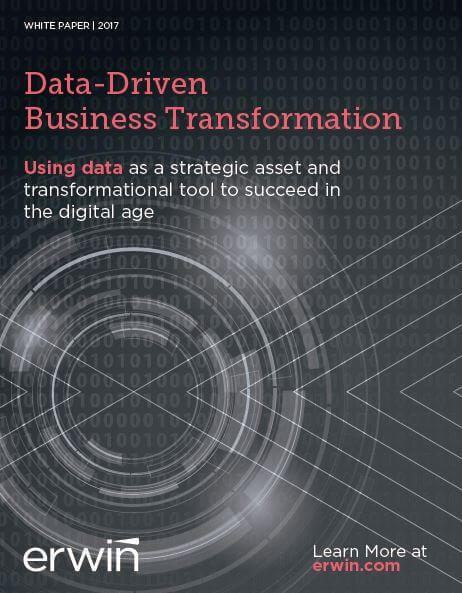
Data-Driven Business Transformation

Using data as a strategic asset and transformational tool to succeed in the digital age

Companies such as Airbnb, Amazon, Netflix and Uber have realized the value of data, harnessing it to create new business models, redefine and disrupt entire markets, and change the way customers think and therefore behave.

Known as data-driven enterprises, these organizations have transformed everything – how they make decisions, invent new products or services, and improve processes to add to both their top and bottom lines.

But digital transformation isn’t just about technology. It’s bigger than that – an organization’s culture, operations, business applications and content are all impacted. So then, how does an enterprise ensure that its digital transformation is successful? What’s the key?

The answer is data, or more specifically data management because what you do with your mission-critical information will determine your ability to achieve the desired results the C-suite wants to see.

By becoming part of your company’s DNA, data transforms everything …
Are you ready to seize the day – or should we say, seize the data and use it for competitive advantage and growth?

Download the white paper.

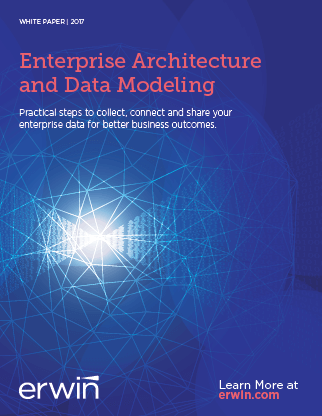
Enterprise Architecture & Data Modeling

Practical steps to collect, connect and share your enterprise data for better business outcomes.

Effective data and enterprise architecture management is about enabling smarter business decisions; providing management access to the right information, in the right format, at the right time. In this white paper, you’ll discover how to:

  1. Adopt a business-outcome approach to enterprise architecture.
  2. Relate data and enterprise architecture to what the C-Suite really want.
  3. Build future-state models that secure senior management investment.
  4. Leverage data management to build architectures more quickly, manage data in context, and deliver information that management need.
  5. Deliver Digital Business improvements with enterprise and data architecture.
  6. Focus on outputs and audience to increase value to the organization.

Download The White Paper

Categories

The Business Value of Data Modeling for Data Governance

Data governance works best when it’s strongly aligned with the drivers, motivations, and goals of the business. But given that data can be a technical discipline, it’s often difficult to find a way to translate the technical data environment into an easy-to-understand format that uses business terminology.

Whether you are a businessperson looking to understand how to make data governance work for you, or a data management professional trying to communicate better with your business sponsors, this white paper offers practical, real-world guidance on how to better align data governance with business goals.

Download The White Paper

Operationalizing Data Governance with Living Metadata

With any metadata project, it is critical to recognize that as the business transforms, the data and metadata must continually be updated and reviewed to ensure it continues to be useful.

In this white paper we explore best practices in maintaining a “living” metadata management platform. We also cover the key factors in ensuring timeliness and utility of an enterprise metadata resource and how collaboration and utilization enhance data governance and stewardship.

Download The White Paper